
There is a moment, just before Lionel Messi receives the ball, when the game seems to inhale. Defenders tense, goalkeepers shuffle, and 80,000 people instinctively rise a few inches from their seats. Then the pass arrives, Messi’s left foot caresses it as if it were made of glass, and football changes shape for a few seconds.
For nearly two decades, Messi has been the sport’s north star – the player by whom all others are measured. His story is not just a catalogue of goals and trophies, but a narrative of persistence, evolution, and a kind of quiet genius that has captivated both casual fans and tactical obsessives.
In an era dominated by data and branding, Lionel Messi still represents something reassuringly simple: a boy, a ball, and an undiluted love of the game.
From Rosario to the World: The Origins of Lionel Messi
Every legend needs a beginning, and Messi’s starts in Rosario, Argentina, on cracked concrete and dusty pitches.
A Small Kid with a Big Problem
Born in 1987, Lionel Messi showed outrageous talent almost immediately. But there was a problem that threatened to overshadow the promise: a growth hormone deficiency. His height stalled, treatments were expensive, and for a while, his future in professional football looked fragile.
What makes the story compelling isn’t that he overcame a medical condition – it’s how he did it. He didn’t grow into a powerhouse athlete. Instead, he built a game based on balance, agility, and pure technique. In many ways, the perceived weakness pushed him toward the style that would one day terrify defenders worldwide.
The Barcelona Bet
At 13, Messi crossed the Atlantic after Barcelona agreed to support his treatment. The now-famous contract-on-a-napkin story has become part of football folklore, but the real drama unfolded inside La Masia, Barça’s academy.
Among other gifted youngsters, Messi still stood out. Coaches recall that he didn’t talk much. He let the ball do the speaking. Within a few years, he was training with the first team, learning from Ronaldinho, Xavi, and Iniesta, and preparing to rewrite the club’s history.
The Barcelona Years: Building a Footballing Myth
If Rosario is where the story began, Barcelona is where it became epic.
Rising Through the Ranks
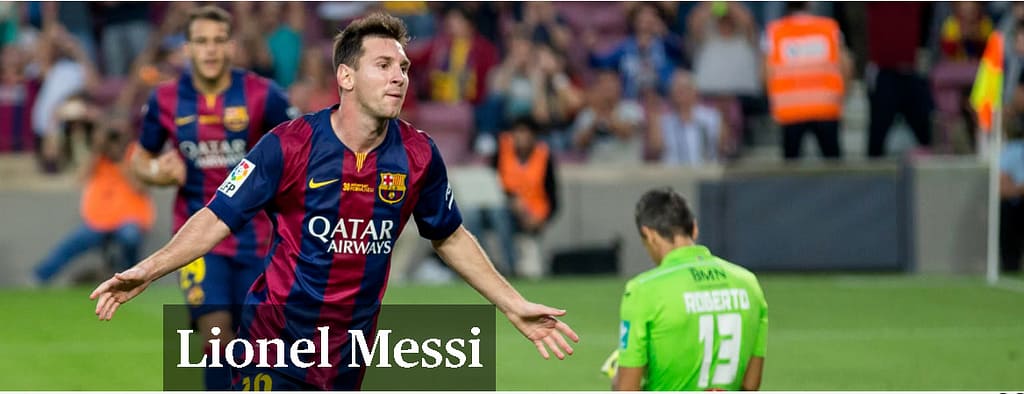
Messi’s official debut for Barça’s senior side came in 2004. The early flashes were electric: the daring dribbles, the low centre of gravity, the fearlessness against taller, stronger defenders.
Frank Rijkaard gave him his chance, but it was under Pep Guardiola that Messi truly became the heartbeat of one of the greatest club sides ever assembled. Playing as a false nine, he blurred the lines between striker, playmaker, and winger. Total football had found its perfect soloist.
The Trophies and the Numbers
The honours list still feels surreal. Multiple Champions League titles, La Liga crowns, Copa del Rey wins, and an avalanche of goals. At one point, he was scoring at a rate that looked more like a video game glitch than a real player’s output.
Yet what made Messi exceptional was not just how much he scored, but how he did it. One week he was flicking in an outrageous chip, the next he was dribbling past five defenders à la Maradona. Even for neutrals, there was a sense that they were watching something unrepeatable.
The Messi Skillset: Genius in the Details
Strip away the emotion, and Messi’s greatness still makes sense on the chalkboard.
The Dribble: Art at Full Speed
With the ball at his feet, Messi seems to operate in a private gravitational field. His touches are tiny, almost imperceptible, keeping the ball within a boot’s length at sprinting speed. There are no circus tricks for their own sake; it’s all in the hips, the shoulders, and the sudden changes of direction.
Defenders often speak of feeling helpless. They know what he wants to do. They just can’t stop him.
The Pass: Vision from Another Angle
As his game matured, the playmaking side of Lionel Messi came to the fore. Dropping deeper, he began to orchestrate games as much as decide them. His through balls don’t just find teammates; they hit them in stride, at the one angle that splits defenders and leaves goalkeepers stranded.
Coaches studying film constantly highlight one trait: Messi appears to see the picture a fraction earlier than everyone else. It’s anticipation masquerading as magic.
The Finish: Left Foot of a Lifetime
If you had to build a highlight reel of modern football, many of the clips would end the same way – ball on Messi’s left foot, net bulging.
The signature goal: cutting in from the right, opening his body, and curling the ball toward the far post, just beyond the keeper’s reach. But there’s more range than that. Toe‑pokes in crowds, low drives, chipped finishes, long-range rockets. Predominantly left-footed, yes, but with more than a few crucial strikes from the right and even headers in big moments.
Messi Soccer Cleats: The Icon at Ground Level
In an age of relentless commercialization, boots matter. And in Messi’s case, messi soccer cleats tell their own story.
Designed for the Way He Moves
From the early F50 models to his later signature lines, his Adidas boots have been built for acceleration and close control. Lightweight uppers, snug fits, traction patterns designed for sharp cuts – the marketing slogans talk about speed, but really, they’re trying to bottle fluidity.
For millions of young players, pulling on messi soccer cleats is about more than performance features. It’s a ritual – a way to step into his world, even if only on a five‑a‑side pitch in a local cage.
Branding Without the Noise
Unlike louder, more bombastic campaigns built around other stars, Messi’s boot line has often mirrored his persona: focused, technical, less about flash than function. The colours may shift, but the message is consistent – these are boots for players who want the ball at their feet, all game long.
Messi Quotes: A Window into the Mind Behind the Magic
For someone who has spent his life under the spotlight, Messi remains surprisingly guarded. He doesn’t court controversy or chase soundbites. That’s precisely why the most famous messi quotes carry such weight.
Work, Not Wishful Thinking
One of his most shared lines goes like this:
“I start early and I stay late, day after day, year after year. It took me 17 years and 114 days to become an overnight success.”
It’s not poetry; it’s honesty. For kids who see only the finished product – the goals, the trophies, the ads – it’s a reminder that talent alone doesn’t carry you from Rosario to the World Cup.
Another often-cited quote:
“You have to fight to reach your dream. You have to sacrifice and work hard for it.”
There is no ego in these words, just a clear-eyed understanding of what his journey required. They’ve become motivational posters, dressing room slogans, and personal mantras for fans who see in Messi not just brilliance, but grind.
Leadership by Example
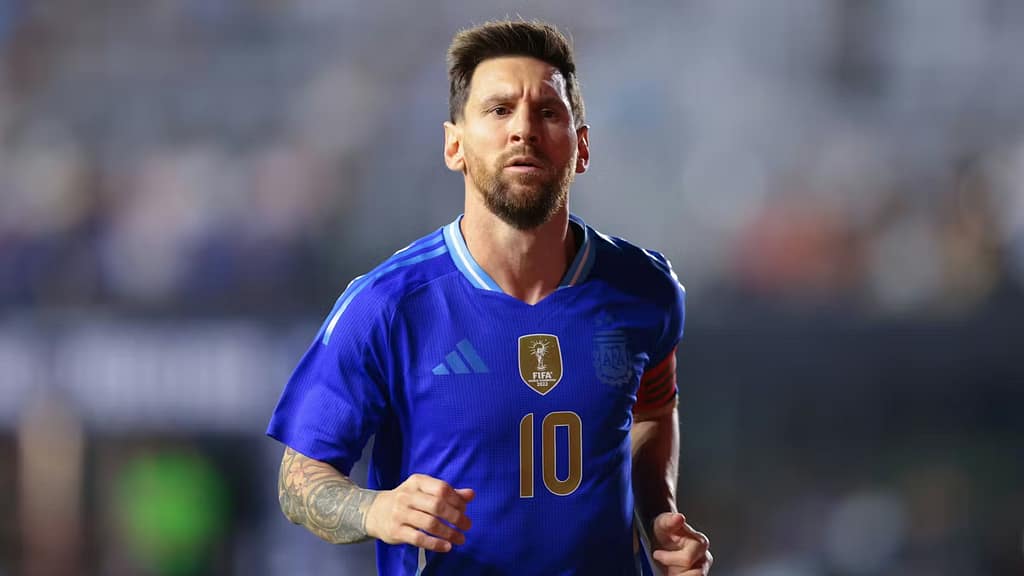
As Argentina’s captain, he didn’t transform into a chest-thumping caricature. His form of leadership is quieter: playing through pain, demanding the ball when others hide, running in the 90th minute as if it were the 9th.
It’s this combination – modest words and ruthless actions – that makes messi quotes resonate. They match the evidence on the pitch.
The Argentina Story: From Nearly Man to Immortal
For years, there was a sense of incompleteness around Messi’s international career. Club dominance was undeniable; national-team joy was harder to find.
The Heartbreak Years
Lost finals in the Copa América and the 2014 World Cup cut deeply. The sight of Messi, head bowed on the Maracanã pitch, became a grim counterweight to his Barcelona highs.
In Argentina, the comparison to Maradona was inescapable and often unfair. Some questioned his passion; others accused him of caring more about club than country. It was a harsh narrative, built more on emotion than evidence.
Copa América 2021 and the World Cup 2022
Then came the redemption arc. Winning the Copa América in Brazil, in front of Brazilian fans, felt like a cinematic twist. The World Cup in Qatar elevated it.
At lionel messi age 35, he didn’t just participate – he dominated. Goals, assists, leadership, and that iconic final against France, where he scored twice in one of the greatest games ever played.
When he finally held the trophy aloft, draped in the Argentina shirt, the debate changed forever. The kid from Rosario was now, unequivocally, the champion of the world.
Lionel Messi Age and the Art of Reinvention
Football is ruthless with time. Legs tire, sprints shorten, and reflexes dull. Yet even as lionel messi age has stretched into the late 30s, his relevance hasn’t faded; it has simply evolved.
From Sprinter to Strategist
In his early Barça years, he was a human blur, constantly darting in behind back lines. Today, he walks more. But when he moves, it matters.
He’s become a specialist in choosing moments. Drifting into space between midfield and defence, he now dictates tempo as much as he breaks lines. The acceleration is still there, deployed in bursts rather than sustained runs.
Inter Miami and a New Frontier
His move to Inter Miami wasn’t just a lifestyle choice. It was a statement about his enduring magnetism. MLS crowds, and global audiences tuning in, are seeing that his game wasn’t built solely on youth. The vision, the passing, the ability to turn a game with one touch – those tools don’t age overnight.
Messi’s late career may be less about stacking records and more about spreading the gospel of his football to new corners of the world. But the level he operates at remains astonishing.
Cultural Impact: Messi as a Global Touchstone
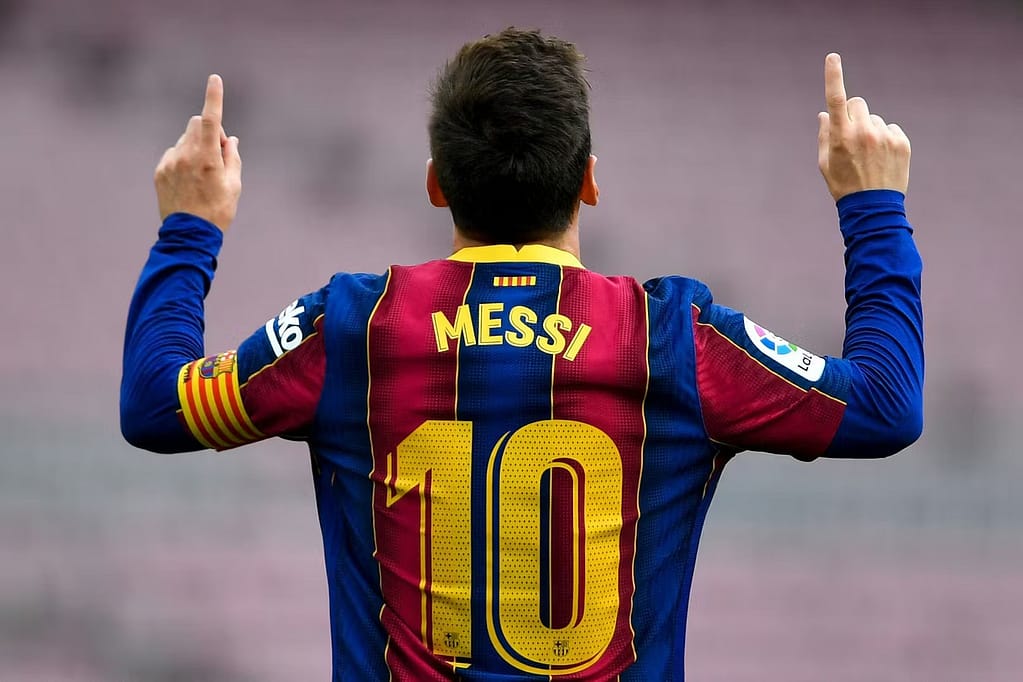
It’s hard to overstate the cultural reach of Messi. In jerseys, murals, social media avatars, and childhood dreams, his presence is everywhere.
The Relatable Genius
Part of his appeal lies in the fact that he doesn’t look like a comic-book superhero. He’s not the tallest, not the most muscular, not the loudest. In an era that can feel hyper-manufactured, there’s something disarmingly human about him.
For a kid who is always the smallest in the team photo, Messi’s story is a lifeline. It says: you don’t need to fit the template to break it.
Beyond the GOAT Debate
Arguments about “greatest of all time” will never fully go away. They are part of the fun. But even among those who prefer other legends, there is a near-universal acknowledgment that Lionel Messi has expanded what we thought was possible on a football pitch.
That might be his true legacy: he shifted the frame. Coaches, players, and fans now talk about space, control, and decision-making in ways shaped by watching him, week after week, do things that used to live only in imagination.
Conclusion: Appreciating Messi While We Still Can
At some point, the day will come when Messi walks off a professional pitch for the final time. When that happens, football will lose a weekly ritual it has quietly grown dependent on: checking where he’s playing, what he did, and how he did it this time.
Until then, the task is simple: watch. Watch the way he still takes a first touch, the way he still finds passes no one else sees, the way a stadium still changes mood the moment he gets the ball.
In the end, Messi isn’t just a name on a scoresheet or a brand on messi soccer cleats, or a handful of iconic messi quotes shared on social media. He is an era in football history, a living reference point for how beautiful, efficient, and emotionally charged the game can be when played at its highest level.
Backbiome is a naturally crafted, research-backed daily supplement formulated to gently relieve back tension and soothe sciatic discomfort.